From rules to intelligence: implementing Annex-22-compliant AI in pharma visual inspection
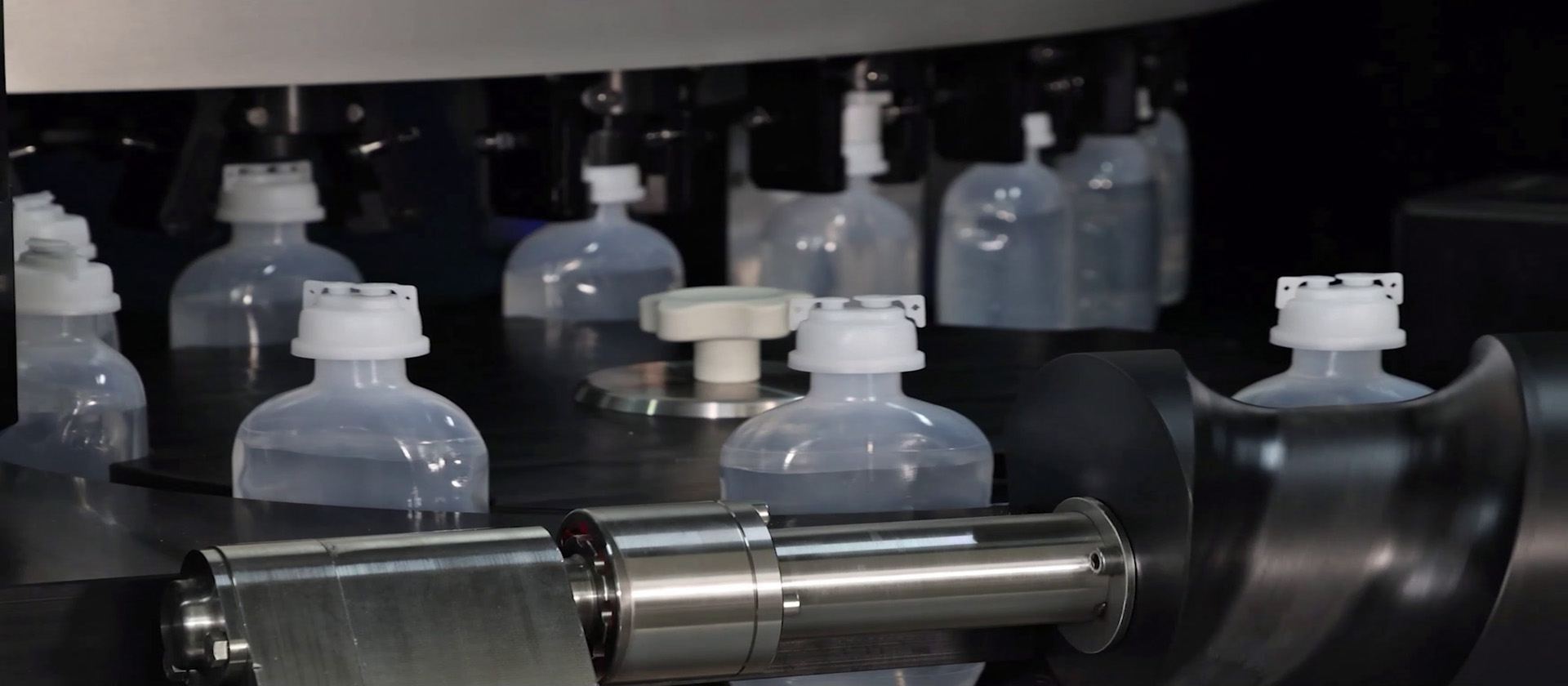
At PHARMAP 2026, GF shared its experience in implementing Artificial Intelligence within pharmaceutical visual inspection systems. During the congress, GF presented how AI has been successfully introduced on their inspection platform in full compliance with Annex 22, adopting a controlled, non-self-learning approach suitable for regulated environments.
The adoption of AI, particularly convolutional neural networks, represents a significant step forward in pharma visual inspection. When applied within a regulated framework, AI can enhance detection performance while maintaining full control, traceability, and compliance.
Particle inspection: beyond rule-based logic
Conventional particle inspection systems typically rely on frame differencing, reflection filtering, and rule-based object classification. While effective, these approaches depend on predefined logic, require extensive parameter tuning, and are highly sensitive to noise and variability.
By introducing neural networks into the inspection workflow and maintaining the same object extraction methods, GF has achieved a more robust separation between good units and defective products. AI-based classification reduces sensitivity to noise and enables more reliable discrimination under varying conditions.
The integration of AI with analytical vision modules, such as advanced object clusterization, further strengthens inspection reliability. In particular, it allows a more consistent distinction between bubbles and true particles based on their apparent movement trajectories across frames. As a result, overall accuracy increases while false rejection rates are significantly reduced.
Cosmetic inspection: flexibility and simplification
In cosmetic inspection, traditional vision systems often require defect-specific configurations and finely tuned regions of interest for each product. This leads to complex setups, long commissioning times, and intensive recipe management.
Neural network-based inspection introduces a far more flexible architecture. A single model can manage multiple cosmetic defect types and product variants by training on relatively small image datasets per class. No product-specific preprocessing or predefined search areas are required, simplifying both implementation and ongoing operation.
For end users, this translates into easier recipe management, faster deployment of new products, and greater consistency across inspection tasks.
Performance, scalability, and standardization
The neural network models implemented on the LYNX platform are specifically designed and optimized to achieve computational performance comparable to, or better than, the rule-based algorithms they replace. This ensures high inspection throughput without compromising system efficiency.
Moreover, AI models demonstrate strong generalization capabilities across different machines and applications. Similar inspection scenarios can leverage shared datasets and models with minimal adaptation, supporting scalability and encouraging standardization across multiple production lines.
A Controlled and Compliant AI Approach
GF’s experience demonstrates that static neural network models, when deployed under controlled and non-adaptive conditions, offer clear advantages in accuracy, robustness, and operational efficiency for both particle and cosmetic inspection.
Aligned with Annex 22 requirements, this approach confirms that AI can be safely and effectively integrated into pharma inspection systems, not as an experimental technology, but as a practical, compliant, and high-performing solution for today’s regulated environments.